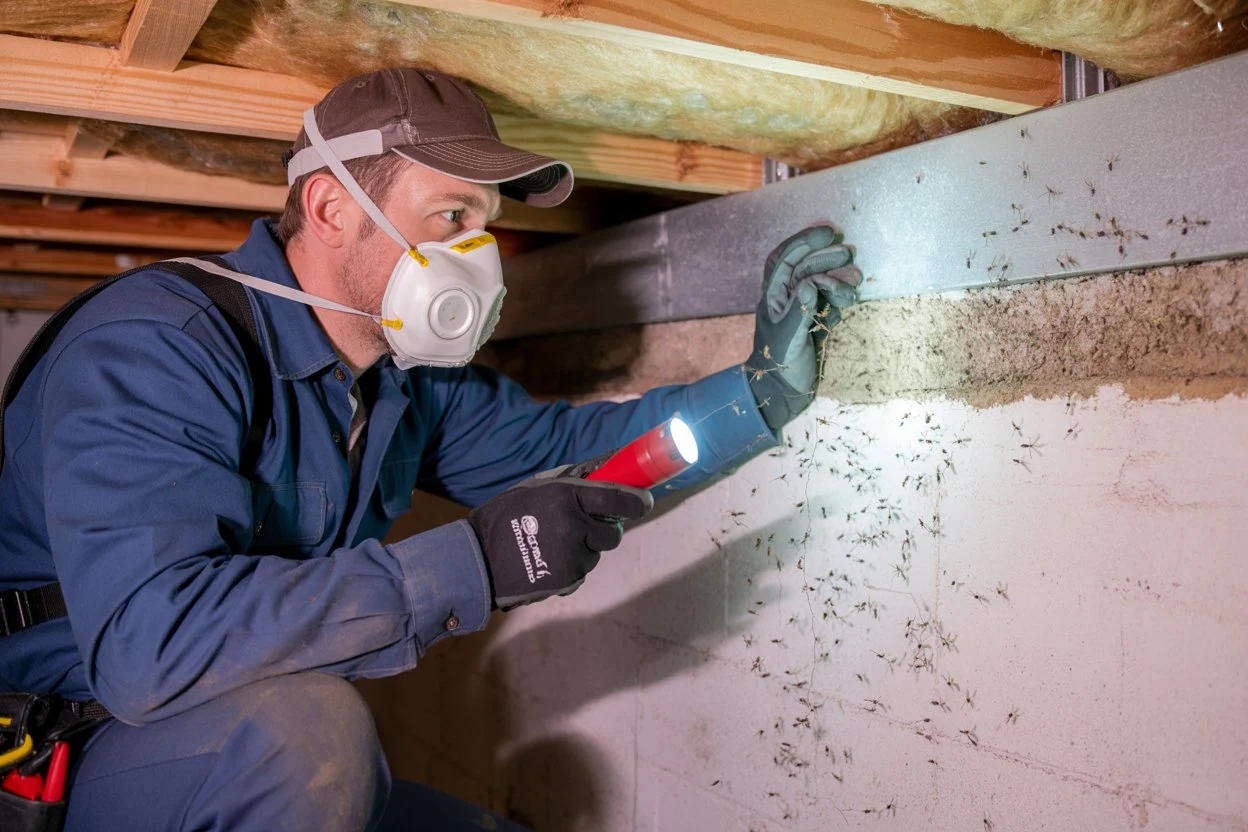
Small pointed droppings in cabinets or drawers
Record where this evidence appears and whether it is fresh or recurring. Its location can help focus the mouse inspection.
Mission Viejo pest service
Mice can live close to stored food and nesting materials while leaving only subtle evidence. Their small size lets them use narrow gaps around doors, cabinets, pipes, and foundations, making detailed inspection essential.
Pest evidence
For mouse control, record the exact location, time, and frequency of fresh evidence before cleaning or applying a product. Several signs considered together are more useful than one clue alone.
Record where this evidence appears and whether it is fresh or recurring. Its location can help focus the mouse inspection.
When checking for mice, note the time and part of the building where this sign occurs. Repeated activity can help identify travel or nesting areas.
During a mouse control assessment, photograph visible damage or physical evidence before repair when it is safe. New changes are more useful than old, undated signs.
Compare this possible sign of mice with other evidence at the property and note any related moisture, food, shelter, or access conditions.
Property conditions
Garage storage, worn weather stripping, plumbing gaps, clutter, bird seed, and pantry access can help mice settle indoors. Attached garages often create an intermediate route into living spaces.
Inspect this condition near the areas where mice has been reported. It may connect exterior activity with an indoor route.
For mice, check whether this resource is available consistently and whether activity increases when conditions change.
Protected spaces can allow mice to remain close to the building. Look for fresh evidence before making repairs or removing materials.
Inspection and service
The mouse control process should confirm the pest, connect activity with property conditions, explain the selected control steps, and provide a practical way to check results.
Identify fresh mouse evidence and likely nesting zones
Inspect low-level gaps and interior utility penetrations
Place control devices where they can be monitored safely
Seal practical routes and verify that activity has stopped
Inspection findings
Mice often follow wall edges and pass through gaps around doors, pipes, cabinets, and garage transitions. The room where droppings appear may be connected to an opening several feet away through a wall void. Mapping fresh signs makes the exterior search more focused.
Monitoring and control devices should sit along active travel edges where they can be checked safely. Exclusion materials need to suit the surface and resist gnawing. Food storage and clutter reduction support the plan, but they do not replace repairs to a confirmed entry route.
Clean affected areas safely after documenting them, then watch for new droppings, sounds, nesting material, or package damage. A lack of fresh signs across the known route is more meaningful than moving a device and assuming the problem is gone.
Before service
Before mouse control, include the exact place where activity first appeared, how often it returns, recent moisture or building changes, and any products, repairs, or cleanup already completed. Clear photos or a safely collected specimen may also help with identification.
Pest prevention
Prevention should address the food, water, shelter, or access that supports mice. The useful steps are the ones connected to findings at the individual property.
Homes
Kitchen, pantry, garage, laundry, and utility areas deserve close attention. A plan should protect children and pets while keeping devices accessible for monitoring.
Residential pest control information →Businesses
In commercial settings, mice can exploit stock rooms, shared walls, receiving areas, and gaps beneath equipment. Routine documentation helps detect low-level activity early.
Commercial pest control information →Service areas
When assessing mice, neighborhood features can influence pest pressure, but the inspection still needs to evaluate the building, landscaping, moisture, storage, and access at the individual property.
Service questions
Mouse droppings and tracks are generally smaller, and mice often use small low-level gaps. A full set of signs is more reliable than a single dropping.
Cabinets offer food, shelter, and openings around plumbing or wall voids. Cleaning alone will not stop access if the route remains open.
A single sighting cannot establish the population. Fresh droppings, repeated noises, and monitoring help determine the extent.
Effective exclusion uses durable materials, addresses confirmed routes, and is checked after control work rather than treated as a one-time patch.
Related services
Find the source of rat or mouse activity with rodent inspection, control, exclusion, and prevention guidance for Mission Viejo homes and businesses.
Explore rodent controlLearn the signs of roof rat activity and request rat inspection, control, exclusion, and prevention help in Mission Viejo.
Explore rat controlGet practical help identifying and controlling cockroaches in Mission Viejo kitchens, bathrooms, garages, drains, and commercial spaces.
Explore cockroach controlService request
When calling about mouse control, include the exact location, how long the activity has been present, and any steps already taken.