Frequent biting around patios or shaded entries
Seeing frequent biting around patios or shaded entries? Note the exact location and timing. It helps focus the inspection.
Mission Viejo pest service
Mosquito pressure is best addressed by finding water sources and shaded resting areas. Even small containers can produce mosquitoes, so a yard-by-yard inspection often matters more than treating the air alone.
Pest evidence
For mosquito control, record the exact location, time, and frequency of fresh evidence before cleaning or applying a product. Several signs considered together are more useful than one clue alone.
Seeing frequent biting around patios or shaded entries? Note the exact location and timing. It helps focus the inspection.
Note which room or building feature shows larvae moving in standing water, and how often. Repeat activity in the same spot usually points to a nearby travel or nesting route.
Photograph activity near dense ground cover before cleaning up or making repairs. Fresh, dated evidence helps an inspection more than old signs with no timeline.
Weigh water held in saucers, drains, toys, or gutters against your other findings. Also note any moisture, food, shelter, or access nearby.
Property conditions
Irrigation, containers, clogged drains, bromeliads, tarps, fountains, and dense vegetation can create localized breeding or resting habitat. Some invasive mosquitoes use very small water-holding objects.
Check this condition near wherever mosquito activity has already been reported. It's often the breeding source behind it.
Ask whether this condition is consistently present, since mosquito activity often increases whenever it changes.
Mosquitoes can breed in spaces like this for a long time. Check for standing water before any repair or removal.
Inspection and service
We confirm where mosquitoes are actually breeding and connect it to standing water and resting sites on the property. We then explain the steps we recommend and give you a way to check that the source has been addressed.
Inspect containers, drains, irrigation, and plants
Identify removable breeding sources
Recommend water management and maintenance
Apply targeted control to suitable resting sites when needed
Inspection findings
Mosquitoes may develop in plant saucers, toys, buckets, drains, tarps, clogged gutters, or other small pockets of water. Walk the property after irrigation or watering and note shaded resting areas as well as containers. The nearest large water feature isn't always the source.
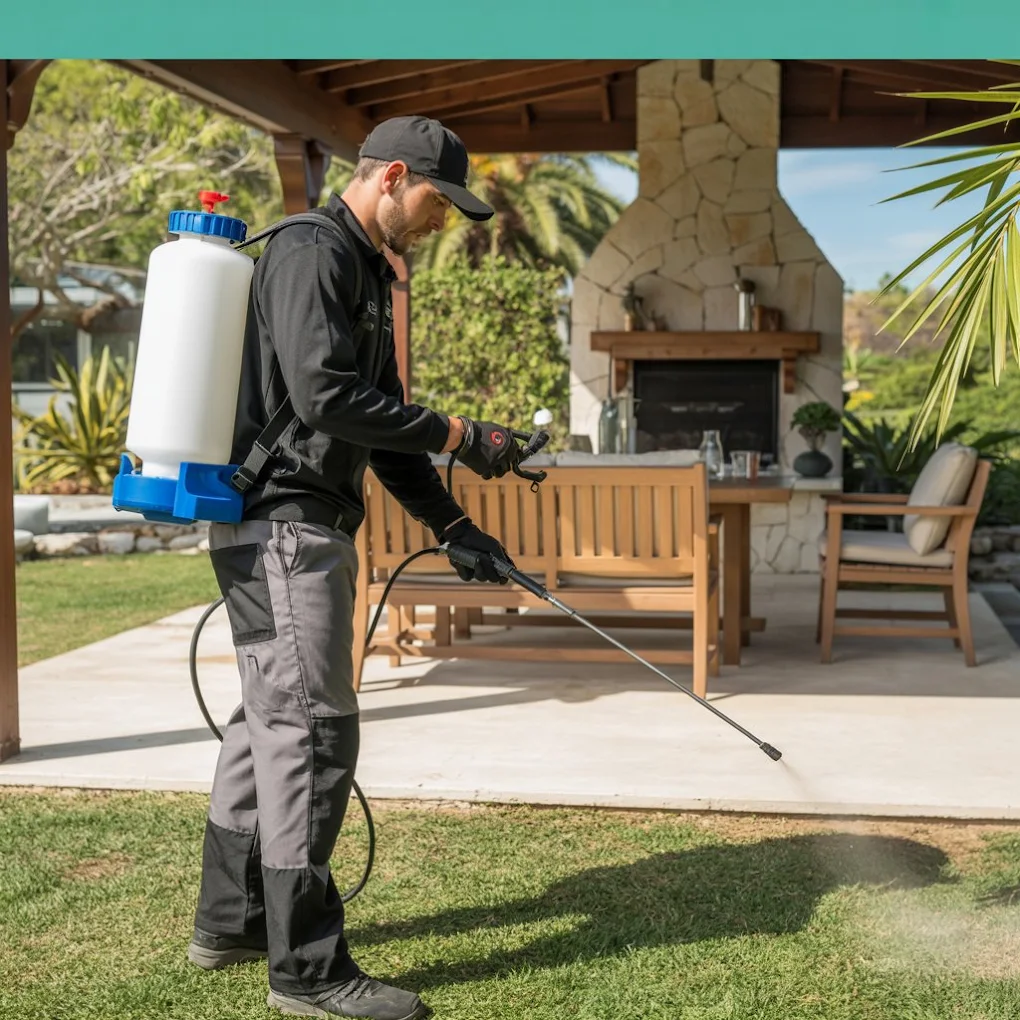
Mosquito control starts with source reduction: finding and eliminating standing water where mosquitoes breed, since a single source can sustain activity across a whole yard. Where water can't be removed, such as fountains, drains, or low spots, a larvicide targets the larval stage without treating the whole property. A barrier treatment applied to shaded vegetation and resting areas reduces adult mosquitoes between visits. The right combination depends on where mosquitoes are breeding and how the yard is used.
New water can collect after irrigation, rain, cleaning, or yard work. Recheck the same containers and drains, keep plants manageable, and note whether biting activity changes by time of day and location.
Before service
When you contact us about mosquitoes, tell us where the activity first appeared and how often it returns. Also mention any recent watering or rain. Mention any products, repairs, or cleanup you've already tried. A clear photo or safely collected specimen can also help with identification.
Pest prevention
Focus prevention on what we actually find: the food, water, shelter, or access that's been supporting mosquitoes.
Homes
Backyards, patios, side yards, and entry plantings should be inspected systematically. Neighboring sources can affect activity, so keep reducing what attracts pests.
Residential pest control information →Businesses
Outdoor seating, planters, drains, decorative water, and watering schedules should be part of routine facility checks.
Commercial pest control information →Service areas
Neighborhood conditions can affect mosquitoes pressure. But the inspection still comes down to the building, landscaping, moisture, storage, and access at your property.
What to expect
Mosquito control is stronger when breeding sources, resting areas, drainage, irrigation, and outdoor exposure are considered together.
Bring the exact location of the activity, timing, and useful photos or notes. The first conversation can then focus on the evidence.
Planning and pricing
Scope depends on standing-water sources, site drainage, plants, nearby breeding pressure, and the areas where people spend time outdoors.
Service questions
Some species can develop in very small water-holding containers. The duration and condition of the water matter more than its size.
Adults can move in from nearby areas, and untreated water can produce a new generation. Source reduction is central to lasting improvement.
No. Some local species bite during daytime, while others are most active around dawn or dusk.
A properly maintained and circulating pool is less suitable, but covers, adjacent drains, toys, and neglected water features may hold breeding water.
Related services
Cut down on spiders with inspection, web removal, fewer insects for them to eat, sealing entry points, and practical prevention for Mission Viejo properties.
Explore spider controlUnderstand flea life cycles, pet-area inspection, treatment preparation, and follow-up for Mission Viejo homes and yards.
Explore flea controlReduce tick habitat and exposure with inspection, landscape guidance, pet-area planning, and targeted property control in Mission Viejo.
Explore tick controlService request
When you call about mosquito control, tell us: